
2026 2nd International Conference on Engineering Mechanics and Intelligent Manufacturing (CEMIM 2026)

Prof. Yajun Liu
South China University of Technology, China
Prof. Yajun Liu was born on September 20, 1974 in Jiangxi, China. Native speaker of Chinese, fluent in English. His Education and Academic Research Experiences is as follows: December, 2016- Now Professor in South China University of Technology School of Mechanical and Automotive Engineering. December, 2009- December, 2010. Visiting Professor in Fluid Power Research Center (FPRC) Purdue University at West Lafayette, USA.Feb, 2005 – July, 2016. Post-doctoral Research Fellow, Tokheim JV company in China. June, 2002 Ph. D. in Mechanical Engineering. South China University of Technology, Guangzhou,China.
His research interests include Digital signal processing technology and its application in mechanical systems (such as hydraulic System for EnergySaving.); Intelligence control and Manufacturing Engineering. Moreover, Prof. Yajun Liu has published more than 270 papers in Journals and proceedings of international conferences. 40+ patents on Mechanical System design and manufacturing.
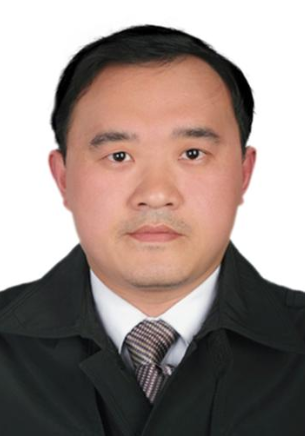
Prof. Zhongren Wang
Hubei University of Arts and Science, China
He currently serves as Dean of the School of Mechanical Engineering, Hubei University of Arts and Science; Director of Xiangyang Key Laboratory of Intelligent Manufacturing and Machine Vision; and Person-in-Charge of Hubei Pilot Test Base for Robotic Vision Weld Seam Tracking.
His academic appointments include Director of Hubei Mechanical Engineering Society, Member of the Visual Detection Special Committee of China Society for Image and Graphics, Member of Intelligent Manufacturing Special Committee of Chinese Association for Artificial Intelligence, Vice Chairman of Hubei Welding Society, and Adjunct Doctoral Supervisor at Wuhan University of Technology and Wuhan University of Science and Technology.
His main research interests cover machine vision and intelligent welding. He has presided over 6 national and provincial ministerial research projects and more than 10 enterprise-commissioned projects. As the first or corresponding author, he has published over 100 journal papers, been granted more than 40 invention patents, and compiled 2 textbooks as chief editor.
As the first completer, he was awarded one Second Prize and one Third Prize of Hubei Provincial Science and Technology Progress Award. As a core participant, he has won two Special Prizes and one First Prize of Hubei Provincial Teaching Achievement Award.
Speech Title: Key Technologies for All-Position Pipeline Welding
Abstract: All-position pipeline welding serves as a core process in the construction of major projects such as petroleum, electric power energy and municipal pipe networks. Welding quality and construction efficiency directly determine the operational safety of pipe networks and project progress. Compared with fixed-station welding, field pipeline welding in the wild faces prominent challenges including variable spatial postures, complex construction conditions, harsh operating environments and heavy reliance on subjective manual operation. These issues frequently lead to uneven weld formation, frequent welding defects, prolonged construction cycles and high operational safety risks, which greatly restrict the automatic and high-efficiency construction of pipeline projects.

Prof. Jin Xie
South China University of Technology, China
Jin Xie, Ph.D. in Mechanical Systems Engineering from Kitami Institute of Technology, Japan, is a professor and doctoral supervisor at the School of Mechanical Engineering and Automotive Engineering, South China University of Technology, and the leader of the “Precision Microfabrication Technology and Intelligent Equipment” research team. His research focuses on precision microfabrication technologies and the automation and intelligent systems of manufacturing processes.
He serves as an editorial board member of the *International Journal of Machine Tools and Manufacture*, a committee member of the Precision Grain Engineering and Nanotechnology Professional Committee under the Production Engineering Branch of the Chinese Mechanical Engineering Society, and a member of the Japan Society for Precision Engineering.
Dr. Xie has received numerous honors, including the Japanese Ministry of Education Research Scholarship, the JASSO Research Fellowship, the Annual Award from the Japanese Abrasive Processing Society, the First Prize of Guangdong Provincial Science and Technology Progress Award, and the First Prize in the Nanjing Overseas Scholars Entrepreneurship Competition.
He has led and completed multiple vertical research projects funded by the National Natural Science Foundation of China, Guangdong ProvincialKey Natural Science Foundation, Guangdong Key Science and Technology Program, and the Guangzhou Major Industry-University-Research Collaborative Innovation Project for Foreign Cooperation. He has published over 30 SCI-indexed papers, including 10 in the *International Journal of Machine Tools and Manufacture*.
Abstract: In high-efficiency precision machining and manufacturing, workpiece removal, tool wear, and equipment mechanical vibration constitute a nonlinear dynamic system that is difficult to analyze and control. Typically, manual intermittent adjustments are required on-site during the machining process, resulting in extremely low machining efficiency. This report introduces and discusses the construction method of analytical models driven by on-site data and application cases of AI-assisted control to replace manual adjustments for two different machining mechanisms: mechanical machining and laser machining. Furthermore, it analyzes the digital twin technology and its process visualization application characteristics in the AI-assisted control process.